
Heavy-duty incline slat conveyors
Heavy-duty incline slat conveyors.
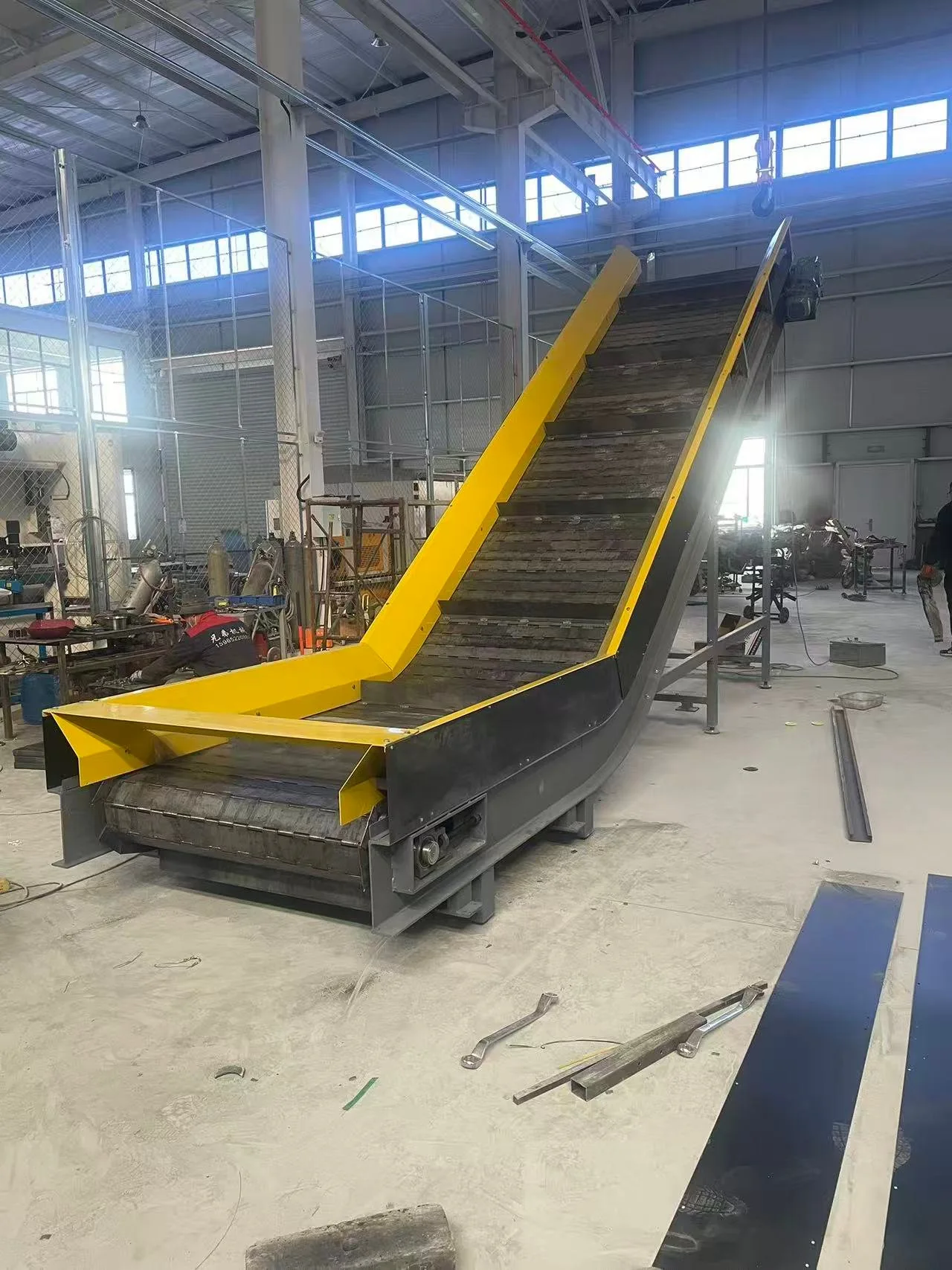
Move heavy or abrasive material between loading and discharge heights. Steel slats, cleats and sidewalls are configured around your material, required capacity, lift height and available floor space.
How it works
Loading, lifting and discharge in one machine
A typical Z-type layout has three sections, so material can be loaded at floor level and discharged at height without an extra transfer.
1 · Horizontal loading section
A low, wide receiving section with a feed hopper or guide plates takes material from operators, loaders or upstream equipment.
2 · Incline section
Cleats (pusher plates) on the steel slats and high sidewalls stop material sliding back while it is lifted.
3 · Top discharge
Material is discharged at the required height into a machine, bin, container or the next conveyor.
Configuration
Designed for your rise and footprint
Incline angle, lifting height and lengths are calculated from your layout and the material you lift.
| Layout | Z-type (horizontal – incline – horizontal), L-type or straight incline |
|---|---|
| Carrying surface | Heavy steel slat plates on roller chain, with welded cleats at set intervals |
| Sidewalls | High steel sidewalls and hopper guards along the loading and incline sections |
| Frame & support | Heavy welded steel frame with support legs and bracing sized for the lifting height |
| Width, rise & angle | Made to order from your material, capacity and available floor space |
| Drive | Geared motor at the head end with chain drive; variable speed available |
| Finish | Industrial paint finish with high-visibility guards; stainless options on request |
Capacity and load rating are calculated for your material and confirmed in the quotation.
Applications
Typical heavy materials
- Metal parts & castings — feeding machining, cleaning and heat-treatment lines
- Scrap & recycling — lifting metal scrap and recyclables into balers, shredders or containers
- Bulk materials — stones, aggregates, coal, ore and other lumpy material
- Machine tool chips — removing chips and turnings from machining centres
- Bagged and boxed goods — raising heavy packages between floor levels
Every application is reviewed against the material’s weight, size and temperature before we confirm the design.
Gallery
Built for heavy duty
Photographed in our workshop before shipment.
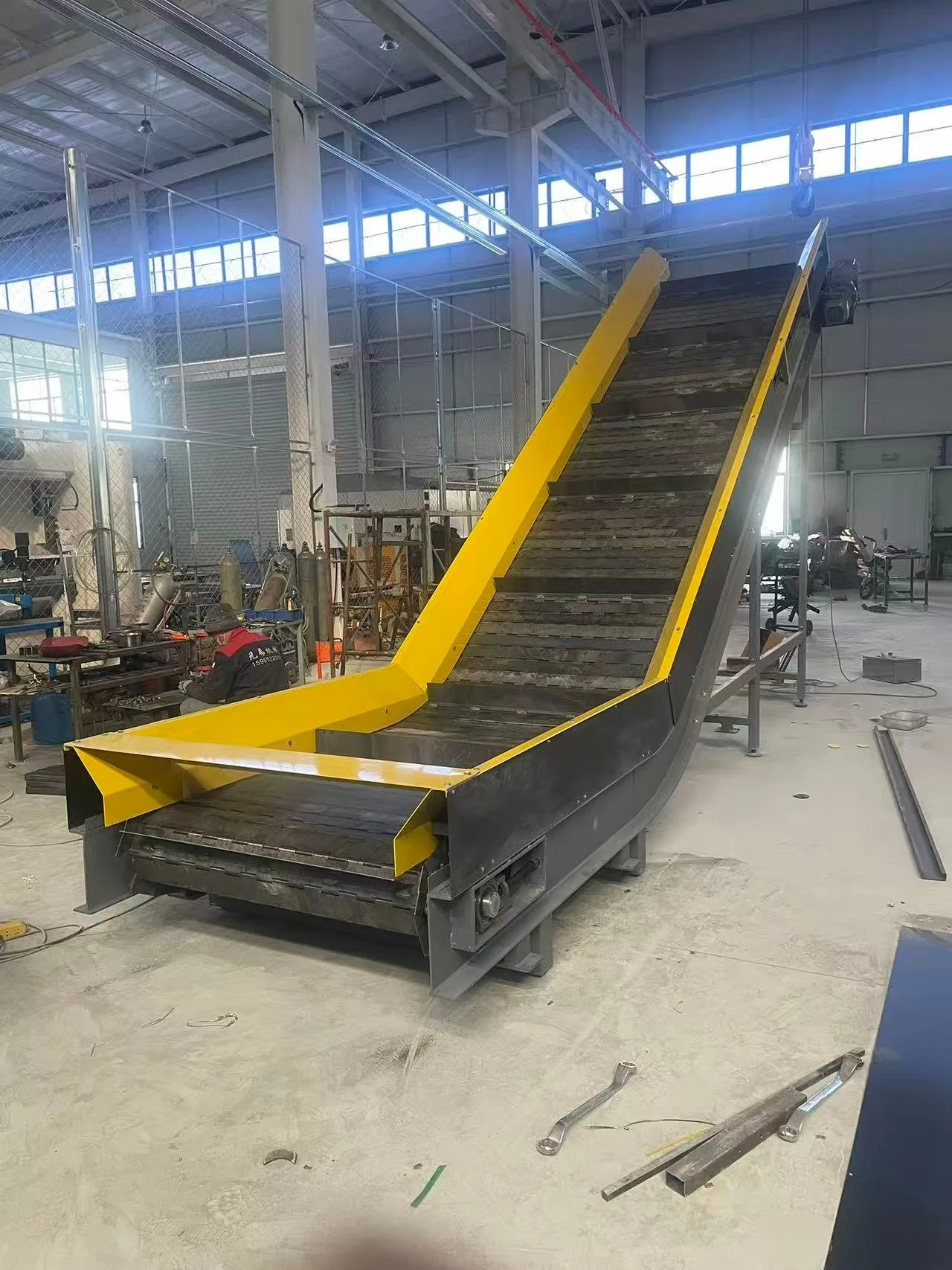
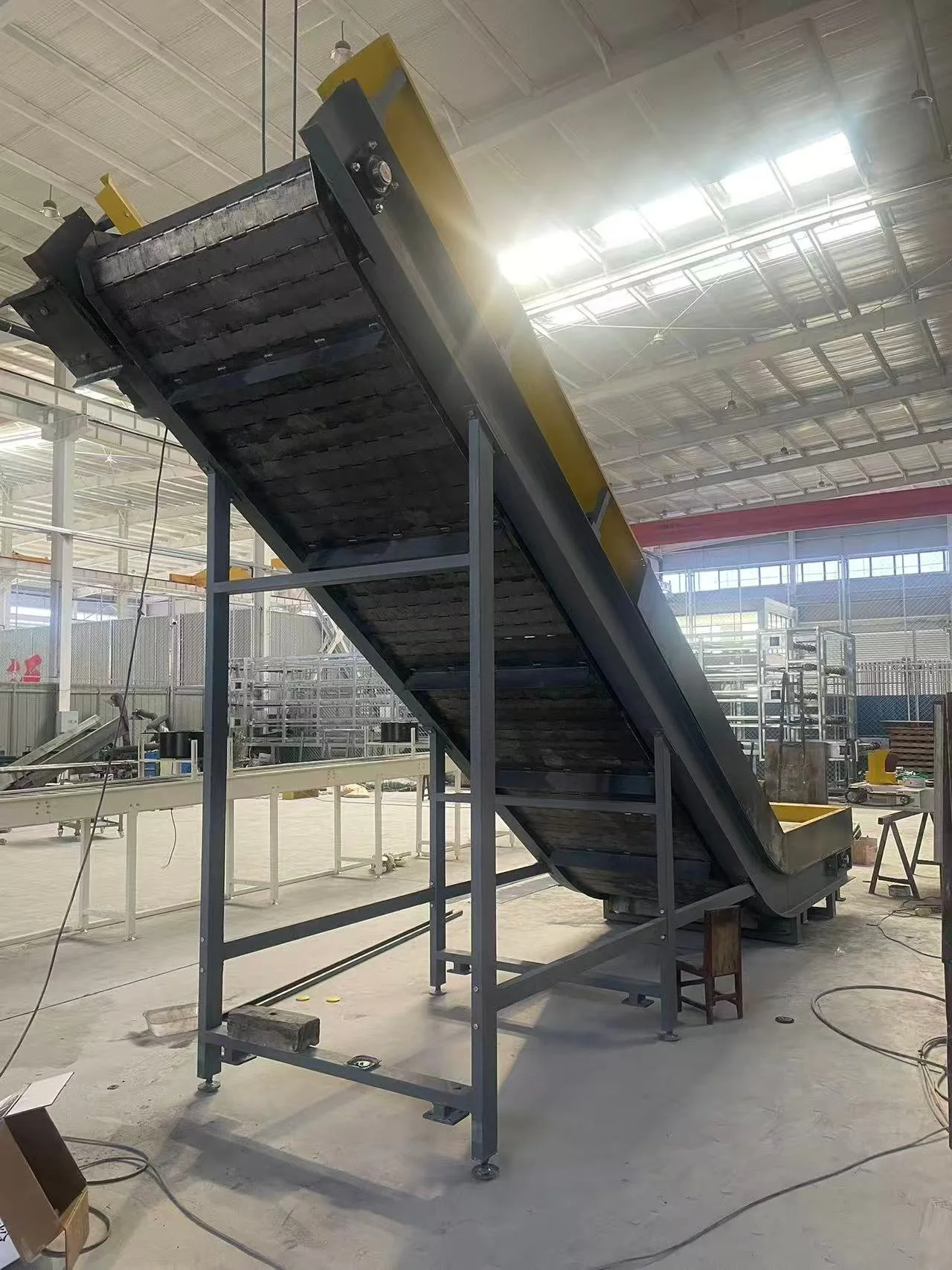
Made in our Ningjin workshop
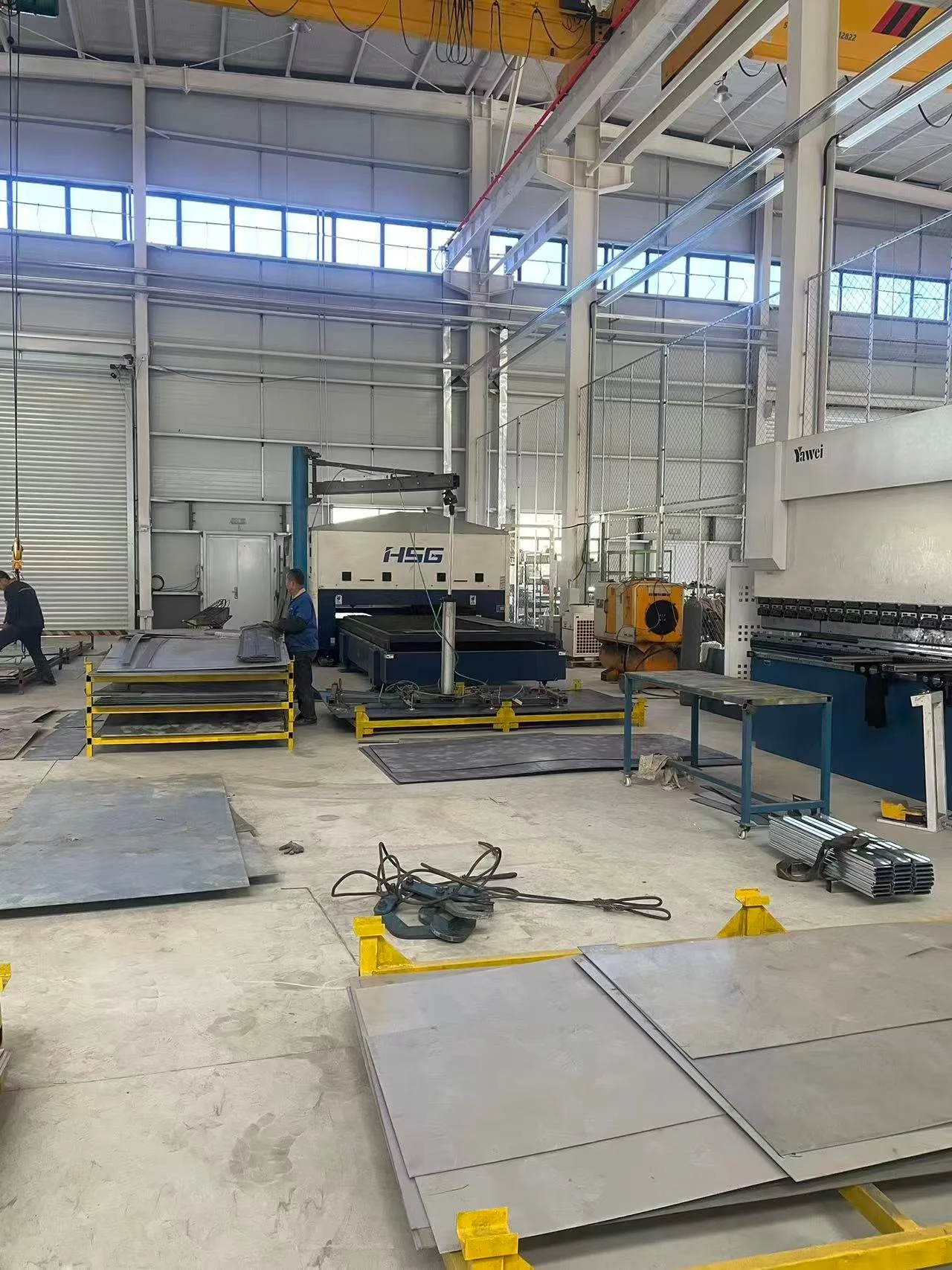
Cut, formed and assembled in-house.
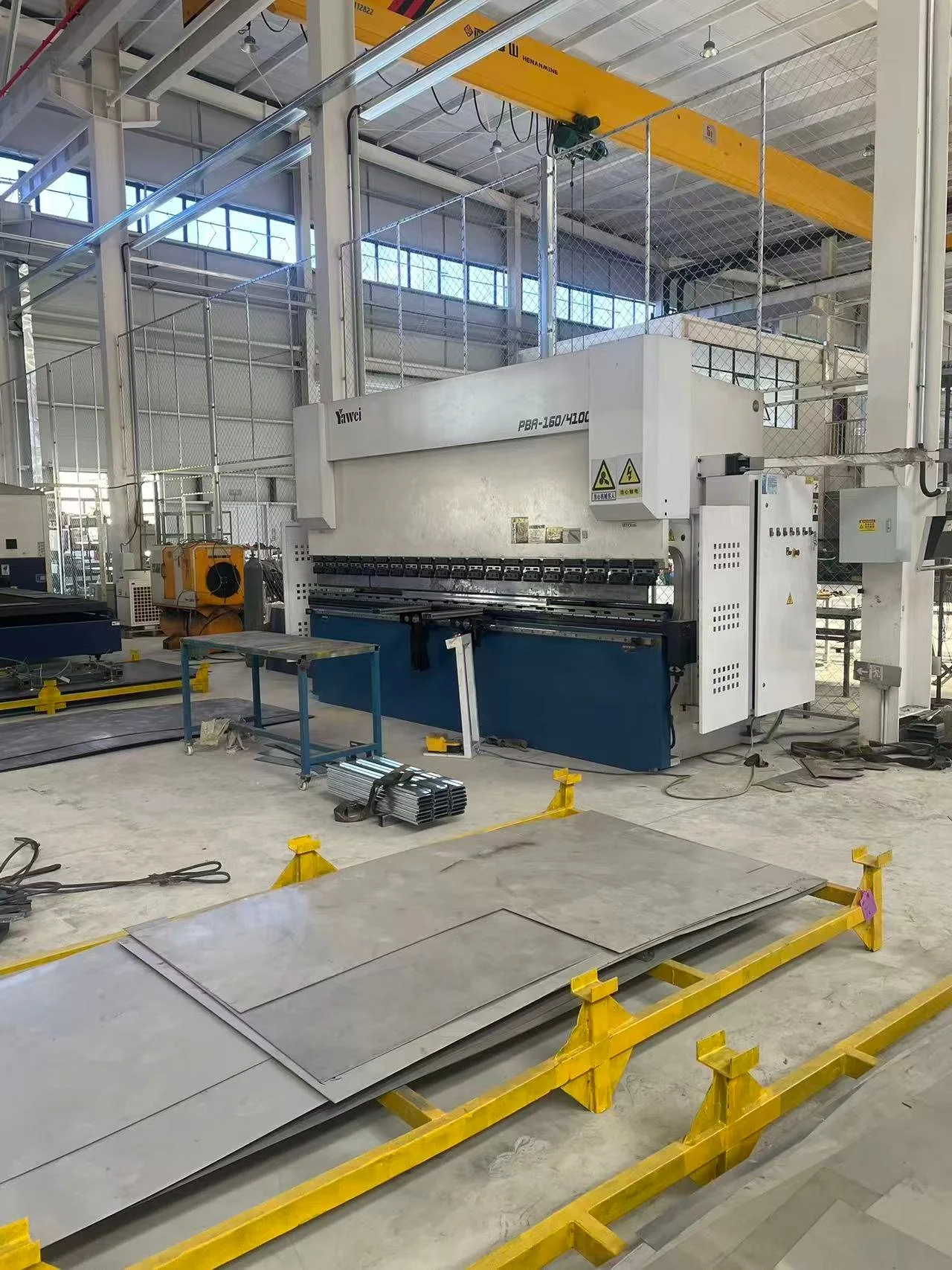
Frames, side guards and carrying components are fabricated in our own workshop in Ningjin County, Shandong. Steel sheet is cut on a fiber laser and formed on a CNC press brake before welding, assembly and a running test of the complete conveyor.
Factory visits and video inspections can be arranged before shipment.
FAQ
Frequently asked questions
What is the difference between an incline slat conveyor and an incline belt conveyor?
An incline slat conveyor carries material on steel plates with cleats instead of a rubber belt. It handles heavier, sharper, hotter and more abrasive material and is the usual choice when a belt would be cut or worn quickly.
How steep can the conveyor be?
The angle depends on the material and the cleat spacing. We calculate it from your layout, the lifting height and the material, and confirm it in the drawing.
Can it be loaded by a forklift or loader?
Yes. The horizontal loading section can be built low and wide with a hopper to receive material from a forklift, loader or upstream machine.
What do you need to quote an incline conveyor?
The material, its maximum piece size and weight, required capacity, lifting height, available floor length and your power supply. A sketch of the loading and discharge points is very helpful.
Related conveyors
Compare other Mylent conveyors
Slat Chain Conveyor
General-purpose steel plate conveyors for parts, packages and bulk material.
View slat chain conveyor →Heavy-Duty Flat Slat Conveyor
A wide, level steel deck for pallets, bags and long production lines.
View heavy-duty flat slat conveyor →All conveyor systems
Wire mesh, roller, screw and multi-tier conveyors, plus chains, sprockets and spare parts.
See the full range →Request a quotation
Tell us what your incline conveyor needs to carry.
Send the material or product, its weight and size, the required capacity, conveyor length and height, and a photo or layout sketch. Our engineers will review the details and reply with a proposal and quotation.